
6 Essential Bodyweight Exercises Everyone Should Do at Home
Discover 6 essential bodyweight exercises you can do at home to build full-body strength, improve posture, and support everyday movement.
FITNESS
3/15/20263 min read
6 Essential Bodyweight Exercises Everyone Should Do at Home
To be fit, it is not necessary to spend long hours at the gym, use expensive equipment, or perform complicated exercises. There are many simple and effective exercises that can be done at home, which is great news for busy people who don’t have the time to go to the gym or play sports.
In fact, some of the most effective exercises use only your body weight and can be done right at home. What matters most is including full-body movements that work the legs, glutes, chest, back, and arms. Well-chosen bodyweight exercises can effectively cover all of these areas.
In this article, we’ll explore 6 essential bodyweight exercises that work the whole body and cover the key movement patterns your body needs for everyday life.
Why Bodyweight Exercises Matter
Bodyweight exercises are powerful because they:
Train functional movement (how you move in real life)
Improve strength, balance, and coordination
Are gentle on joints when done correctly
Require no equipment
Can be adapted for all fitness levels
When chosen wisely, just a few exercises can support your body far more effectively than long, random workouts.
The 6 Essential Bodyweight Exercises
These exercises together cover squatting, hinging, pushing, pulling, core stability, and balance, the foundation of healthy movement.
1. Squats
Movement pattern: Squat
Squats strengthen the lower body and support movements we do every day, such as sitting, standing, and lifting.
Benefits:
Builds leg and glute strength
Supports hip and knee health
Improves mobility and posture
How to do it:
Stand with feet hip-width apart
Sit back as if lowering into a chair
Keep chest lifted and heels on the floor
Stand up by pressing through your feet
2. Glute Bridges
Movement pattern: Hinge
The hinge movement is essential for protecting your lower back and strengthening the glutes, especially if you sit a lot.
Benefits:
Activates glutes and hamstrings
Reduces lower-back strain
Improves posture and hip stability
How to do it:
Lie on your back with knees bent and feet flat
Press through your heels and lift hips
Squeeze glutes at the top
Lower slowly with control
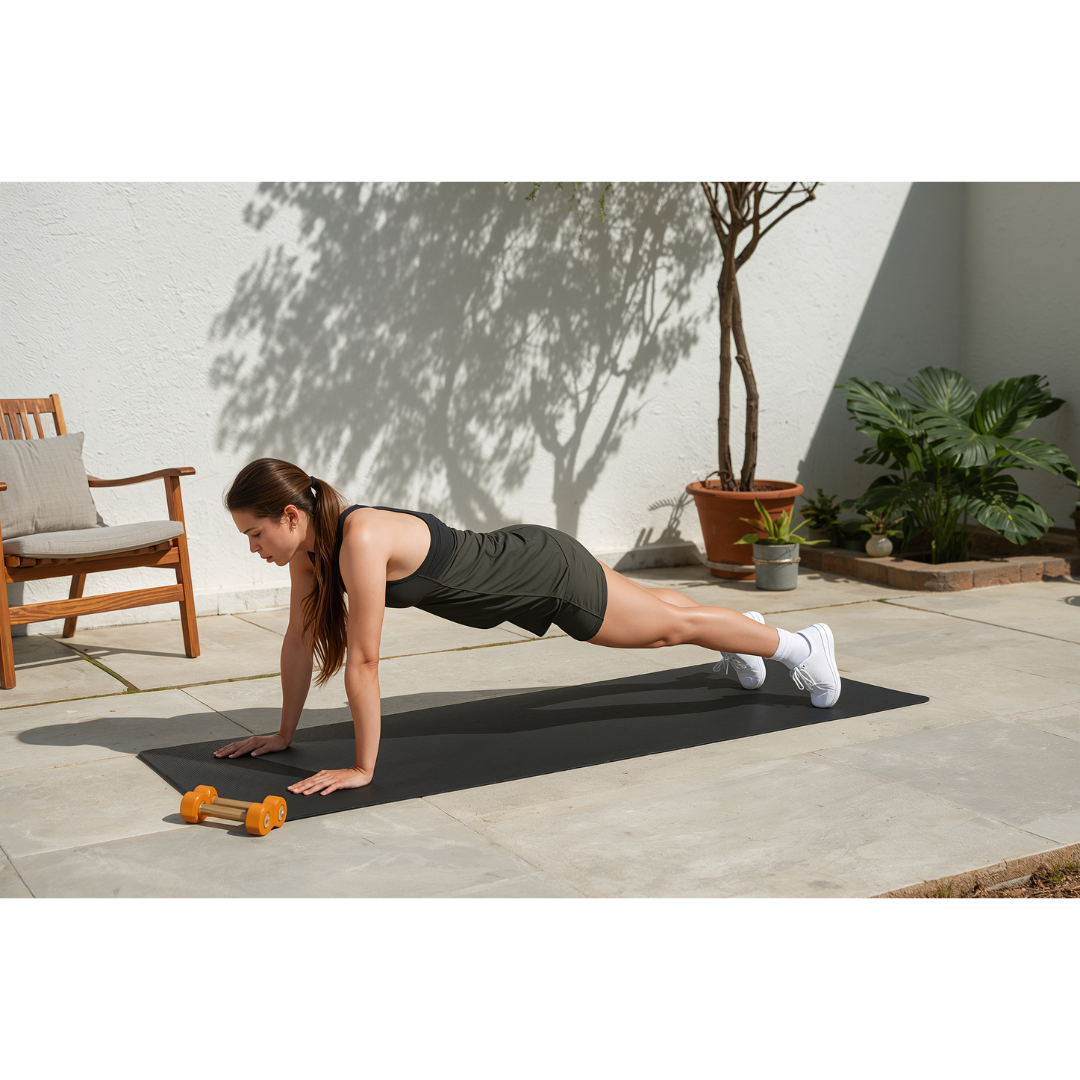
3. Push-Ups
Movement pattern: Push
Push-ups build upper-body strength while also engaging the core.
Benefits:
Strengthens chest, shoulders, and arms
Improves core stability
Supports everyday pushing movements
How to do it:
Hands under shoulders, body in a straight line
Lower chest toward the floor
Push back up with control
Beginner options: Wall push-ups or knee push-ups.
4. Bodyweight Rows
Movement pattern: Pull
Pulling exercises are often overlooked, but they are essential for posture and shoulder health.
Benefits:
Strengthens the upper back
Improves posture
Balances push exercises
How to do it:
Use a sturdy table, bar, or resistance band
Pull your chest toward your hands
Squeeze shoulder blades together
Lower slowly
Tip: Bend your knees to make it easier.
5. Plank
Movement pattern: Core stability
Planks train the core to support the spine during movement.
Benefits:
Strengthens the core
Protects the lower back
Improves balance and posture
How to do it:
Forearms on the floor, body in a straight line
Engage core and glutes
Hold while breathing steadily
6. Lunges
Movement pattern: Single-leg & balance
Lunges challenge balance and strengthen each leg individually.
Benefits:
Improves balance and coordination
Builds leg and glute strength
Helps prevent muscle imbalances
How to do it:
Step one foot forward
Lower back knee toward the floor
Push through the front heel to stand
Alternate sides
How to Use These Exercises
You don’t need to do all six every day. A simple approach is:
2–3 sets of each exercise
8–15 reps (or 20–60 seconds for plank)
3–4 times per week
If you’re short on time, even 10–15 minutes using these exercises can make a real difference.
Conclusion
These 6 essential bodyweight exercises cover squatting, hinging, pushing, pulling, core stability, and balance, the foundation of healthy movement.
You can adapt these exercises to suit your body and current fitness level, and it’s always best to start gradually. Consistency is key, so try to incorporate these movements into your daily life whenever possible.
In addition, don’t forget the importance of cardiovascular exercise. When combined with these bodyweight exercises, cardio helps support heart health, endurance, and overall wellbeing. Together, they can help you protect your health, build strength, and live a fit, balanced life.
Sakura Fitness & Beauty
Promoting fitness, health, wellness, and beauty.
© 2025. All rights reserved.
London, UK
info@sakurafitnessbeauty.com